Proudly serving veterans of the U.S. Army, Marine Corps, Navy, Air Force, Space Force, and Coast Guard across Central Texas.Nominate a Veteran in Need

Approved HOA Vendor & Social Enterprise, serving Austin & Travis County

Reliable forced-mow abatements in Austin. Every cut backed by audit-proof evidence.

Partner with a fully insured grounds contractor that takes the headache out of deed-restriction enforcement. We mobilize within 48 hours, deliver time-stamped before and after photo records to eliminate homeowner billing disputes, and reinvest 100 percent of our enterprise surplus to provide free emergency yard cleanups for homebound seniors and disabled veterans across Central Texas.

501(c)(3) Nonprofit Public Charity

Dispatch a work order or request the vendor packet

Send the property once. We confirm scope, rate sheet, and insurance the same business day.

Start typing the street number and name, then pick the match from the list. Example: 1200 Barton Springs Rd, Austin, TX.

One small question keeps automated spam out, so real people reach us faster. Answer with a number or a word, whichever fits.

Certificate of insurance issued with your association named as additional insured within 24 hours. Full compliance with Austin property maintenance standards.

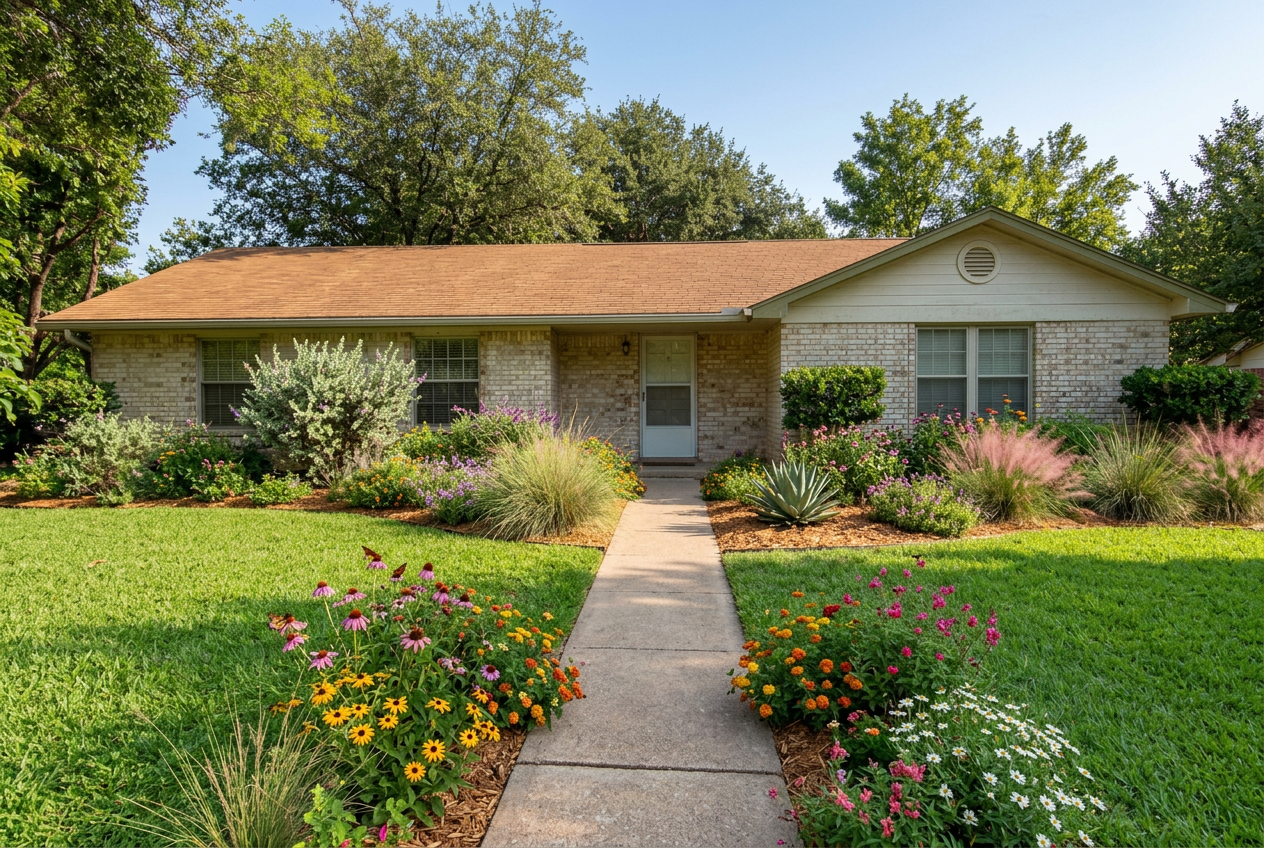
After a Yard Reboot: the same brick home with the walkway cleared and edged, a freshly mowed lawn, and planting beds full of Texas Hill Country natives including purple coneflower, blackeyed Susan, Texas lantana, autumn sage, Texas sage, an agave accent, and Gulf muhly grass.
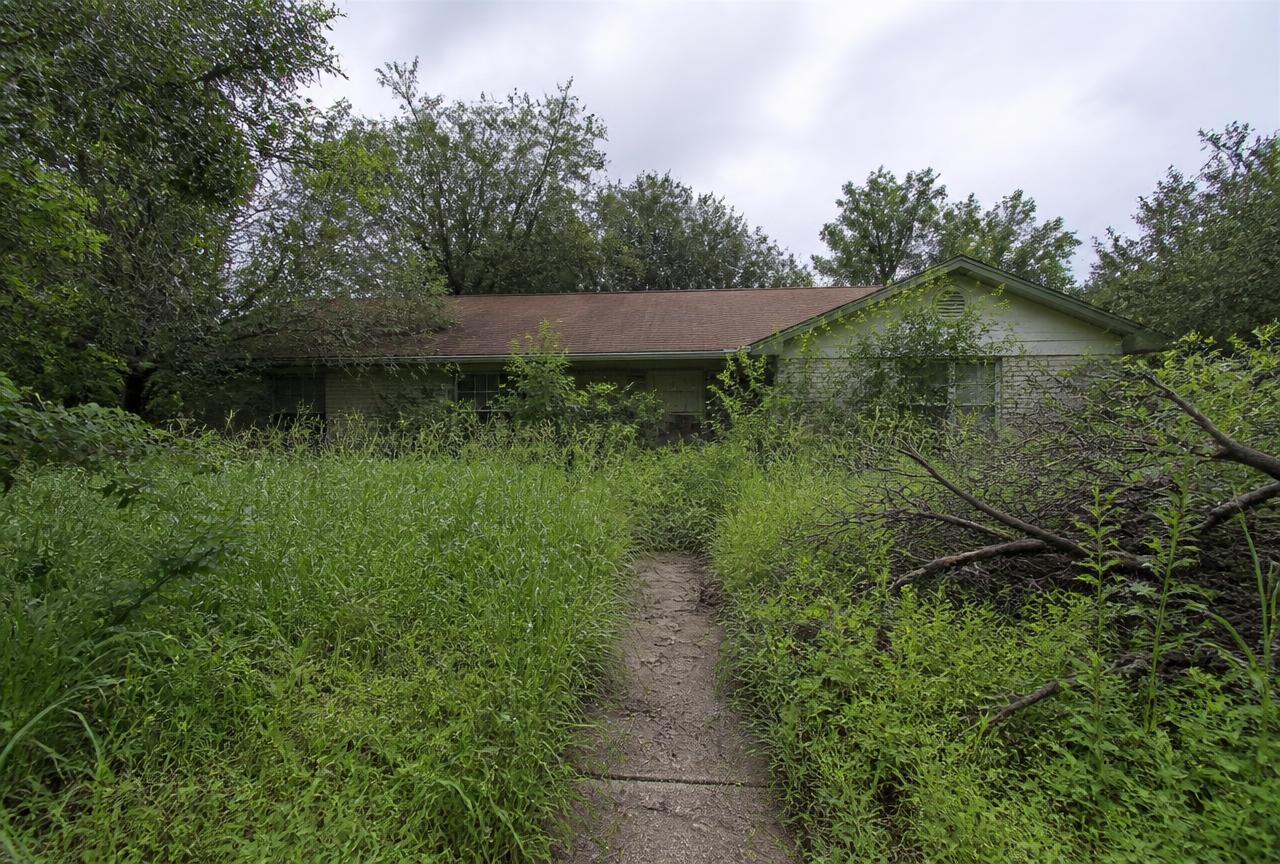
Before a Yard Reboot: a single story Austin brick home almost hidden behind waist high weeds, tangled brush, and fallen branches, with only a narrow cracked walkway visible through the overgrowth.
BeforeAfter

Tap a leaf marker to learn what is growing in each bed.

A Yard Reboot in Austin, shown as a before and after slider. On the left, a home lost behind waist high weeds and brush. On the right, the same home with a cleared walkway, a mowed lawn, and beds replanted with Texas Hill Country natives that feed pollinators year round.

Every dispatch is documented like this, time-stamped and attached to your invoice.

Built around what actually slows a board down

Defensible chargeback packets

Homeowners routinely contest forced maintenance when photos are blurry or property lines are vague. Every Yard Reboot dispatch delivers high resolution, location-tagged, time-stamped before and after photos attached directly to our line-item invoice, making your fee chargeback defensible.

48 to 72 hour mobilization

Do not let neglected lots sit for weeks attracting pests and code complaints. We hold dedicated fleet capacity for rapid response cuts, mechanical sidewalk edging, and hazardous limb clearance across Austin communities.

Fully insured, commercial grade

$1M / $2M commercial general liability, commercial auto, and workers' compensation. Commercial-grade zero-turn mowers and professional gas equipment, run inside posted quiet hours for complaint-free work in master-planned neighborhoods.

The community dividend

Where operational maintenance meets local goodwill

Unlike conventional contractors where maintenance profits leave the community, Yard Reboot operates as an earned-income 501(c)(3) social enterprise. You pay standard market rates, but 100 percent of our operating surplus funds zero-cost yard rescues, overgrowth and brush clearances, and accessible garden builds for fixed-income seniors, disabled military veterans, and neighbors facing physical hardship throughout Central Texas.

Have a resident struggling with age or impairment? See the zero-cost off-ramp

What we clear in Austin

Local conditions: Houston Black clay with a Balcones Fault transition on the west side. Work is scoped against Austin City Code Chapter 10-5.

Communities we already serve near you

Circle C Ranch, Mueller Master POA, Onion Creek, Shady Hollow, Sendera, Anderson Mill, Milwood.

Austin pricing and typical investment

Ranges below reflect real Travis County work orders. Every job is quoted at a fixed price before a crew rolls, and portfolio routes of three lots or more in Austin reduce the per lot rate.

Typical service pricing for Austin, Texas
ServiceTypical range
Forced cut on a single violation lot$336 to $1,121
Portfolio route, three or more lots$266 to $826 per lot
Heavy vegetation and brush abatement$708 to $4,130
Heavy brush and cedar clearing$1,003 to $4,956 per acre
Sightline, sidewalk and curb clearance$212 to $708
Storm debris and limb removal$472 to $2,832
Recurring common area maintenanceFrom $378 per visit

Disposal fees, insurance and the photo documentation packet are included in every quoted price. Residents who are low income seniors, disabled or veterans are cured free through our relief program instead of being billed.

Local abatement rules in Austin

  • Austin enforces vegetation and property maintenance standards under Austin City Code Chapter 10-5, administered in Travis County. Cure timelines run from the notice date, not from the date the board reviews it.
  • Texas Property Code Chapter 209 governs the notice and cure steps an association must follow before it performs a forced cut and charges the owner, so documentation of the notice matters as much as the cut itself.
  • Growth is measured at its tallest point, so a single untouched strip along a fence or alley can keep a Austin case open after the rest of the lot is cut.
  • Cut material must be hauled to a permitted facility. Burning is not an option during the county burn bans that cover most of the Travis County calendar.
  • Heritage and protected trees, creek buffers and drainage easements limit what can be cleared, so those areas are identified and worked around rather than stripped.
  • Re-inspection is photo driven. We hand over dated before and after images per lot, which is what closes a Austin case on the first look.

Austin abatement guides and code compliance checklists

Local guidance for boards and managers working under Austin City Code Chapter 10-5 in Travis County. Work each checklist top to bottom and keep the photos with the notice number.

Austin notice clock: what actually happens after a 311 report

Tall grass and weed complaints in Austin run through Code Compliance under City Code Chapter 10-5. An inspector verifies the complaint, posts or mails a notice, and the owner generally gets a short correction window before reinspection. Miss it and the city can abate the lot and place the cost plus administrative fees on the property, which is far more expensive than a scheduled cut.

  1. Log the notice date and the stated correction deadline the day it arrives.
  2. Photograph the lot before anything is touched, wide shot plus a close shot with a measuring stick in frame.
  3. Cut grass and weeds to under 12 inches across the whole parcel, including the strip between sidewalk and curb.
  4. Bag or haul all clippings and cut brush the same day. Piles left on site read as a new violation.
  5. Photograph the finished lot from the same angles and file both sets with the notice number.
  6. Reply to the inspector with the after photos before the reinspection date rather than waiting to be checked.

Creek buffers, heritage oaks, and where equipment cannot go

Lots backing onto Williamson, Shoal, Bull, or Onion Creek sit inside critical water quality buffers, and oaks at or above 19 inches in diameter are protected trees with their own permitting path. Running a skid steer or grinding stumps in those zones turns a mowing violation into an environmental or tree case.

  1. Map the creek centerline setback before scheduling. Assume no heavy equipment inside the buffer.
  2. Measure any oak or elm at four and a half feet above grade before removing limbs. At 19 inches or more, stop and ask.
  3. Clear ground fuel, vines, and dead limbs inside buffers by hand crew only.
  4. Never spray broadleaf herbicide inside a creek buffer or over a storm inlet.
  5. Keep oak wounding work outside February through June to limit oak wilt spread, and paint any unavoidable cut immediately.

Austin seasonal cut calendar

Central Texas grass does not grow at one rate. Boards that budget a flat monthly cut fall behind in May and overpay in January. Match the cycle to the growth curve and violations mostly stop happening.

  1. March to June: cut every 7 to 10 days. This is when almost every notice is written.
  2. July to August: stretch to 14 days under drought stress and raise the deck rather than scalping.
  3. September to October: return to 10 to 14 days through the fall green up.
  4. November to February: monthly cleanup focused on leaf litter, dead limbs, and cool season weeds.
  5. After any two inch rain event, add an unscheduled sweep of vacant and between owner lots.

Vendor credentials

$1M / $2M commercial general liability with certificates issued naming your association as additional insured within 24 hours of a signed work order.

Download the master vendor packet

A signed W-9 comes with your onboarding paperwork on request.

Talk to a dispatch lead

Service areas across Central Texas

Yard Reboot Project, Inc. is an Austin, Texas based 501(c)(3) nonprofit public charity and earned-income social enterprise. All commercial grounds contracts comply with Texas sales tax rules for landscaping services (NAICS 561730) and IRS Form 990-T guidance. 100 percent of net proceeds fund direct community relief.